Week at a glance
Week 15, covering 2026-04-06 through 2026-04-12, was the week where launch fragility mattered more than classic review-bomb spectacle. The dominant pattern was not one giant ideological backlash. It was that PC games had less and less time to establish trust before Steam users turned their first-session experience into a public verdict. Crystalfall supplied the clearest negative case. OPERATOR supplied the more ambiguous case where visibility, controversy, and aggressive patching all collided without producing an outright collapse. Around those cases, Hidden Object Fest 2026 and Valve's expanding performance-context tools showed that storefront and platform changes were shaping sentiment almost as much as individual games.
That matters because the market no longer waits for a slow consensus to form. A weak launch can harden into a visible warning label inside 24 to 48 hours. A controversial title can still grow if enough players remain curious and the patch cadence is aggressive. A storefront event can lift mid-tier titles at the same time that it makes first-session mistakes more dangerous for everyone else. Week 15 therefore deserves to be read as a trust-compression week. Steam did not become calmer. It became faster.
One caveat remains important. REVIEWBOMB's final weekly dashboard for this exact window was not fully surfaced in the public hub when the original draft was written. That means the report necessarily relies on the public daily archive, visible trend pages, Steam charts references, and the internal logic already established in earlier weeks. The evidence is still strong enough to support the main conclusion: launch credibility was the real battleground of the week.
For the strongest internal context, compare the Crystalfall game page, the broader PC launch trust hub, and the pillar explainer The 48-Hour Steam Trust Window.
Incident deep-dives
Crystalfall became the week's clearest launch-trust failure
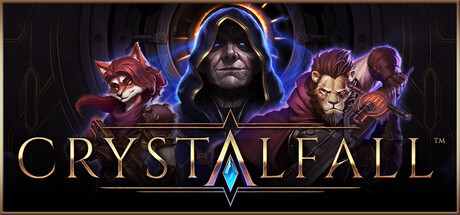
Crystalfall defined the negative side of week 15 because it failed during the exact period that matters most on Steam. Coverage on 2026-04-12 placed the game at 18% positive from 1,525 user reviews just two days after its 2026-04-10 launch. Steam charts aligned with the story by showing an all-time concurrency peak of 6,981 on launch day followed by a much lower live count shortly after. Those metrics matter because they separate demand from retention. The game did attract attention. It simply failed to convert that attention into a trusted first session.
The concrete complaints also mattered. Official Steam discussion updates acknowledged server and login problems caused by high traffic and a broken email-related onboarding step. That changed the story from ordinary launch congestion into immediate credibility damage. Players were not only waiting in line. Some were being blocked before they could even meaningfully test the game, which is one of the fastest ways to turn curiosity into negative reviews.
The developer response centered on stabilization and communication, but the current status at week end remained severe. A backend fix can stop further damage, yet it rarely reverses a public score that negative unless the recovery is both fast and visible. That is why Crystalfall was the cleanest launch-failure case of the week rather than merely one more rough release.
For the stable internal destination, use the Crystalfall game page and the follow-up breakdown Crystalfall Steam Launch Collapse: What Went Wrong in the First 48 Hours.
OPERATOR proved that controversy and growth can happen at the same time
OPERATOR supplied the week's most useful ambiguous case. On 2026-04-11 the game hit a new all-time Steam concurrency peak of 3,327 players while also reaching number 77 in global top sellers during a 50% discount window. At the same time, the developers were still shipping hotfixes for corrupted saves, infinite loading, camera issues, PvP damage behavior, explosive damage calculations, and even a technical problem introduced by a prior patch.
That combination matters because it breaks the lazy assumption that controversy automatically kills traction. In OPERATOR's case, AI-related complaints and technical friction remained part of the public narrative, yet players still kept buying and re-checking the game. The positive interpretation is that the core concept was strong enough to overcome reputation drag. The negative interpretation is that the commercial peak may have been fueled by discount-driven curiosity rather than durable trust.
Developer response here was highly visible. The patch cadence was aggressive, which kept the game commercially alive even if it did not settle the underlying trust question. Current status at the end of week 15 was mixed but not bearish by default. OPERATOR was growing under strain, not collapsing under strain.
For the stable internal destination, compare the OPERATOR game page with the companion report OPERATOR Steam Recovery: Why Player Counts Rose After the AI Backlash.
Hidden Object Fest kept showing how positive discovery can coexist with high-risk launches
Steam Hidden Object Fest 2026 ran from 2026-04-09 to 2026-04-13 and contributed a strongly positive discovery cluster during the same week that Crystalfall was collapsing. REVIEWBOMB's trend coverage associated the event with 6 tracked alerts, only 1 negative and 5 positive, with a 105 reviews-per-hour peak. That matters because it proves the week was not one big negative mood wave. The catalog was still capable of producing optimism and re-engagement if the right visibility conditions lined up with the right kind of title.
The clearest supporting example was Sol Cesto, which hit a new all-time Steam peak of 3,410 players on 2026-04-12. Gray Zone Warfare also remained in a strong rebound phase, with a 24-hour peak of 39,123 during the same observed period and outside reporting tying its broader surge to growth above 1000%. In weekly terms, the implication is simple: Steam was punishing unstable launches and rewarding well-positioned recoveries at the same time.
There was no single developer response attached to the festival cluster, but the status of the trend was clearly positive. Discovery was still a growth lever. It was just no longer a forgiving one.
That split between recovery and launch fragility is easiest to compare through Gray Zone Warfare Steam Recovery and the wider Steam review recovery topic hub.
Valve's performance-context shift changed how players could justify reviews
The platform development that mattered most this week sat underneath the incidents rather than inside them. A Steam client update published on 2026-03-09 had already added hardware-spec context to reviews and optional anonymized framerate data sharing. During week 15, reporting around those changes increasingly connected them to a likely future framerate-estimation feature. That may sound abstract, but it has direct review implications.
A large share of modern Steam backlash comes from performance distrust and mismatched expectations. If Valve can narrow the gap between what a player thinks their machine should deliver and what a game will probably do, it can change review behavior before launch-day frustration turns into a visible public score. The obvious risk is that inaccurate predictions would create a new trust problem instead of solving the old one.
Current status for this platform trend at week end was active and still evolving. It did not yet settle the review-performance problem, but it clearly moved performance trust closer to the storefront itself.
For the stable internal destination, pair this section with Steam Framerate Estimator Explained and Steam FPS Prediction Explained.
Emerging trends
The first big pattern in week 15 was trust compression. Players moved from curiosity to public verdict much faster than before, especially when the first session was visibly broken. The second pattern was visibility under strain. OPERATOR showed that a game can remain commercially strong even while controversy and hotfix churn stay active. The third pattern was selective positivity. Hidden Object Fest proved that the week was not defined by broad consumer hostility. It was defined by a market that sorted titles quickly into reward or punishment depending on whether the experience was verifiable.
That combination is strategically important. A developer now has less time to recover from a weak first impression, but a game with clear improvements or a strong core hook can still grow if the fixes stay visible and the storefront keeps supplying attention.
Platform developments
Week 15's main platform development was Valve's move toward performance-aware storefront context. Hardware-spec review metadata and anonymized framerate sharing became more significant once the archive connected them to potential FPS prediction tooling. That matters because launch-day PC backlash is often driven by expectation gaps rather than by one bug category in isolation.
The broader platform context also included the continuing importance of event-based discovery. Hidden Object Fest was a reminder that seasonal or themed storefront structure remains one of the biggest amplifiers of both sentiment and sales. In other words, Valve was affecting the week from both ends: through visibility and through review-context tooling.
Launch Watch: Next Week's Risk Assessment
- Gray Zone Warfare: Medium risk. Recent project data showed a major rebound after large updates, but recovery spikes can fade if stability slips. What to monitor: retention after the patch-tourism phase and whether recent reviews improve alongside concurrency.
- Wuchang: Fallen Feathers: High risk. Later archive signals around staffing strain and support risk suggest a fragile post-launch environment. What to monitor: patch cadence, stability fixes, and whether communication remains credible under pressure.
- Samson: Medium risk. Launch review weakness and bug-heavy reception already put the title in a trust-repair phase. What to monitor: whether post-patch scores lift meaningfully above the 53% snapshot and whether player sentiment treats the fixes as causal.
What to watch next
The next question after week 15 was whether Crystalfall could recover fast enough to avoid becoming a long-tail warning label. The second was whether OPERATOR's growth would survive once the sale tail and hotfix novelty faded. The third was whether Valve's performance-context push would begin changing how players framed reviews before a purchase rather than after a failed first session.
More broadly, week 15 showed that Steam's grace period around credibility was shrinking. Players were still willing to reward visible improvement, but they were much less willing to wait for a developer to find the problem in public. That makes both launch discipline and response quality more important than ever.
Data digest
- Reporting window: 2026-04-06 to 2026-04-12.
- Crystalfall snapshot on 2026-04-12: 18% positive from 1,525 reviews.
- Crystalfall launch-day peak: 6,981 concurrent players on 2026-04-10.
- OPERATOR peak on 2026-04-11: 3,327 concurrent players and global top-seller rank 77 during a 50% discount.
- Hidden Object Fest 2026: 6 tracked alerts, 1 negative, 5 positive, 105 peak reviews per hour.
- Dominant weekly pattern: first-session trust failures mattered more than classic outrage cycles.
Methodology note: ReviewBomb compares each event against its Steam baseline; How ReviewBomb detects review surges explains the velocity and severity model behind these calls.